Assess and document
Moisture mapping, photographs, and a water-path assessment establish where the floodwater went and what it touched before anything is moved or removed.

Flood damage cleanup and restoration for St. Louis City, St. Louis County, and St. Charles County: extraction, drying, contaminated-water handling, and full claim documentation.
Flood cleanup is the restoration response when water arrives in volume: a basement that fills during a downpour, a lower level taken by rising groundwater, a first floor wet after a storm overwhelms drainage. The work is assessment, extraction, controlled removal of what cannot be restored, cleaning, and monitored structural drying — with every step documented.
Eversafe plans flood work around documented site conditions and procedures consistent with applicable ANSI/IICRC S500 principles. One assumption governs nearly every flood job: water that entered from outside the building is treated as contaminated. Floodwater picks up soil, debris, and contaminants on its way in, and that assumption shapes protective controls, material decisions, and cleaning methods from the first hour.
Moisture mapping, photographs, and a water-path assessment establish where the floodwater went and what it touched before anything is moved or removed.
Standing water is extracted, contents are protected or documented, and materials that cannot be restored are removed under controlled conditions.
Air movement and dehumidification dry the structure, monitored against moisture readings until documented drying goals are met and the property can be returned to pre-loss condition as scoped.
The St. Louis region sits at the meeting of the Mississippi and Missouri rivers, with the Meramec and dozens of creeks threading through St. Louis County and St. Charles County. River flooding makes the news, but most residential flood cleanup calls here start smaller: intense rain that overwhelms foundation drainage and window wells, groundwater rising through floor joints under hydrostatic pressure, a sump pump that lost power or capacity mid-storm, or a municipal sewer surcharging into a basement during a downpour.
The housing stock decides how bad it gets. Older brick homes in St. Louis City and St. Louis County often have full basements that were finished decades after construction — drywall, carpet, and paneling installed over the slab the water spreads across. Newer St. Charles County subdivisions have their own pattern: walkout lower levels on sloped lots, ejector pits for below-grade bathrooms, and sump systems that run constantly in wet seasons. A finished basement and an unfinished one are dried differently, which is why the assessment looks at construction as closely as at the water.
Three different events get called "a flood" on the phone. Rising water from outside is a flood event. Water coming up through a floor drain or toilet is a sewer backup, handled as contaminated water with stricter removal decisions. A burst supply line is a water damage event that can release hundreds of gallons before the shutoff is found. Each one has a different contamination profile, a different documentation approach, and usually a different insurance conversation — so the first job on site is establishing which event actually happened.
Flood losses carry an insurance complication that plumbing leaks do not. Standard homeowners policies generally exclude rising water from outside the home; flood coverage, when a property has it, usually sits in a separate flood policy. Sewer backup is different again — often excluded unless a specific endorsement was added. None of that changes the restoration work, but it changes which claim the documentation supports, and it is worth understanding before the adjuster conversation, not after.
Eversafe's role is the record. Every flood job produces a documentation package: cause-of-loss notes, moisture maps, equipment and drying logs, before-during-after photographs, the written scope, and the final invoice. That package is what the customer hands to their carrier — or to FEMA or a disaster program after a declared event — and it is built during the job, not reconstructed later. Read more on our insurance claims support page and in our guide to what to do after a house flood.
Extraction starts the response, drying is monitored daily, and the whole event is documented for your records and your claim.
Call (636) 219-9302Response for flooded basements — extraction, material decisions, and structural drying for below-grade spaces.
Cleanup after sewer backups and black-water events, with contamination controls and thorough cleaning.
Monitored drying of walls, floors, and framing using air movement and dehumidification, verified against moisture readings.
Assessment, extraction, and drying after storm-related water intrusion, with full project documentation.
The full water damage hub: extraction, drying, flood and sewage response for homes and businesses across the region.
Selected photographs from Eversafe's flood and water damage projects.

Commercial dehumidifier placed during structural drying after water damage — Eversafe Restoration job photo.

Air movers positioned for floor drying during water mitigation — Eversafe Restoration job photo.

Drying equipment set up in living area during water damage mitigation — Eversafe Restoration job photo.

Air movers and dehumidification equipment drying a hallway after water intrusion — Eversafe Restoration job photo.

Water mitigation equipment in place drying affected rooms — Eversafe Restoration job photo.

Dehumidifier and air movers running during structural dry-out — Eversafe Restoration job photo.

Drying equipment placed in bathroom after water damage — Eversafe Restoration job photo.
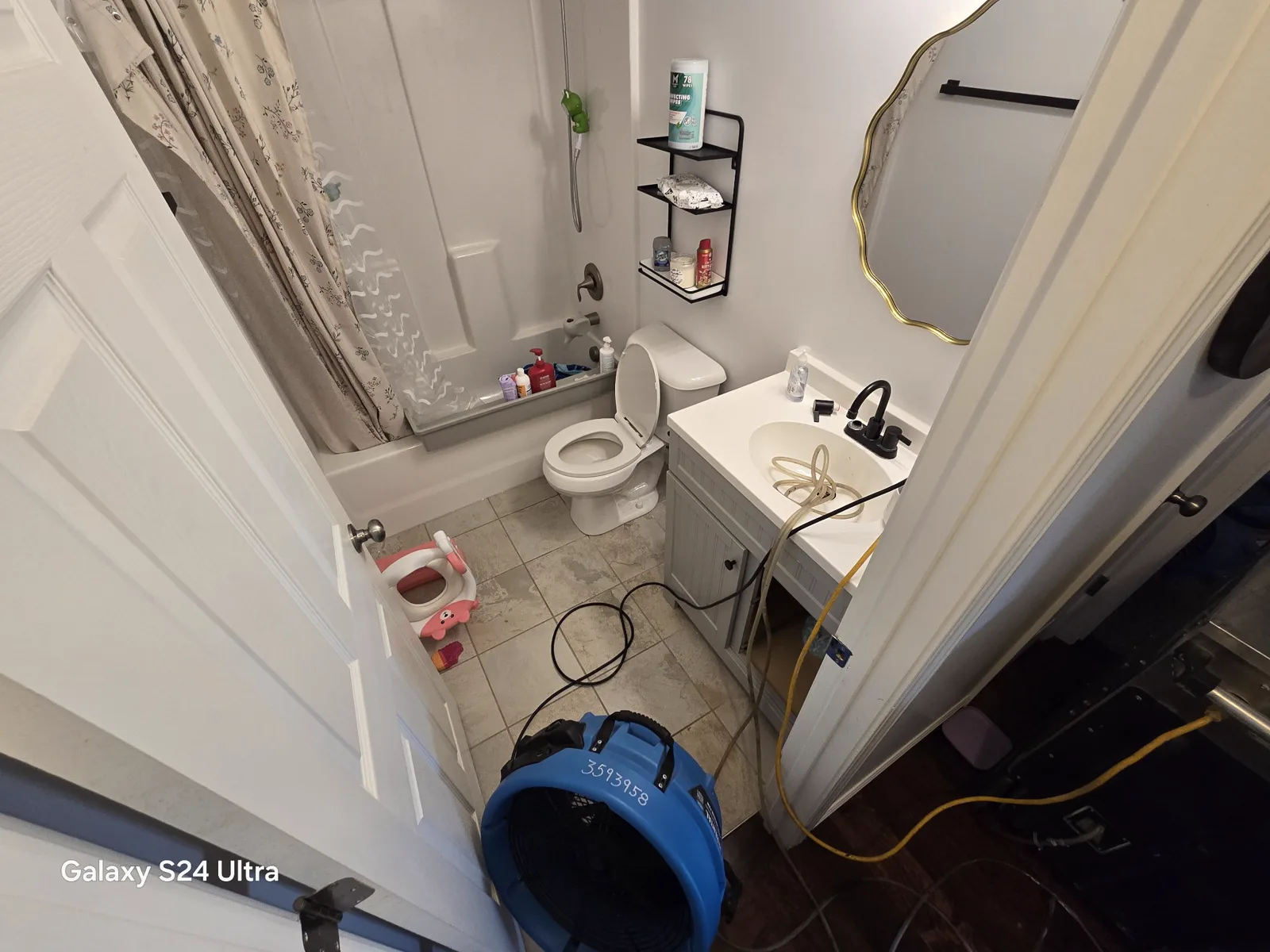
Air mover drying bathroom flooring during water mitigation — Eversafe Restoration job photo.
★★★★★ 5.0 on Google · ★★★★★ 4.8 on Angi
Selected customer experiences, in their own words.
Selected customer reviews
Bob Gaines
3 months ago
"Chad fixed my mold. He explained to me exactly how the mold happened and why it would not happen again. He was very kind to me. I explained I was suffering from a medical level of anxiety and he was very understanding. Every day, Chad made sure to communicate clearly and keep me informed throughout the entire process."
Andrea Herron
6 months ago
"Eversafe Restoration was incredible to work with. We had unexpected water damage and Chad responded quickly and professionally. He explained everything clearly and made sure we understood the repair process. The crew was efficient and thorough. Highly recommend!"
Ryan McGovern
6 months ago
"They took care in giving me the best service. Very detailed oriented in repairing and finishing moisture damage in my home. They did such an excellent job, I won't think twice about calling Eversafe for anymore restoration needs I have in the future!"
Corey Holmes
3 months ago
"11/10 would recommend! Great job, great price, and it took them no time at all."
Matt Guthrie
6 months ago
"Did a great job."
Destiny Boschert
6 months ago
"Excellent service from start to finish. Professional and reliable."
Assessment and moisture documentation, extraction of standing water, controlled removal of materials that cannot be restored, cleaning of what remains, structural drying with monitored equipment, and a complete documentation package. Water that entered from outside the building is treated as contaminated from the start, which shapes the extraction, removal, and cleaning decisions.
Flood cleanup deals with water that arrives in volume and usually from outside — stormwater, rising groundwater, overwhelmed drainage, or a surcharged sewer. That water is planned for as contaminated (Category 3 under ANSI/IICRC S500) until conditions show otherwise, and the affected area is typically larger: whole lower levels rather than a single room. The drying and documentation work follows the same S500 principles as any water loss.
Rising water from outside the home is generally excluded from standard homeowners policies and is addressed, when it is covered at all, through separate flood insurance. Sewer or drain backup is a different event and is often covered only through a specific endorsement. Eversafe provides estimates, photographs, moisture documentation, invoices, and drying records for whichever claim applies; coverage and payment are decided by the policy and the carrier.
Eversafe provides 24/7 emergency phone availability. Scheduling depends on crew availability, distance, access, weather, and site conditions. During widespread storm events, response is scheduled by triage. No fixed arrival time is promised.
Describe the observed source, when the water started, which rooms and materials are affected, whether water is still coming in, and any access or hazard concerns. If a property manager or insurer has project requirements, share those too — the first call sets the documentation up correctly.
The assessment decides material by material. Structural framing, concrete, and many hard surfaces can usually be cleaned and dried. Porous materials that absorbed contaminated water — carpet pad, affected drywall, insulation, upholstered contents — generally require removal. What can be restored is protected and dried; what cannot is documented and removed under controlled conditions.
Still have questions?
We're here to help you find the answers.
24/7 emergency phone availability. Tell us where the water came from, which areas are affected, and any project requirements.