What to Do After a Trauma Event
Property-safety and cleanup-planning guidance for families and property owners in the greater St. Louis region.
Follow authorities first
Follow instructions from emergency responders, investigators, property managers, and other authorities. Do not enter or disturb a restricted scene. Once the property is released, keep people and pets away from affected areas and avoid contact with potentially hazardous material.
Document and plan the work
Photograph conditions when safe and contact your insurer about the policy and claim process. A qualified restoration assessment considers affected materials, access, moisture, contamination, occupancy, and the work authorized by the responsible party.
Depending on documented conditions, the written scope may include containment or engineering controls, appropriate PPE, controlled removal, detailed physical cleaning, drying, ventilation, odor-control options, and disposal. Equipment and products depend on the hazards; no universal procedure or health result should be assumed.
Testing and health concerns
Testing or post-remediation verification is not automatic. When specifically requested or required, it may be separately coordinated; the assessor’s findings remain separate from restoration work. This guide does not diagnose or treat medical conditions. For health concerns after exposure, contact a healthcare professional.
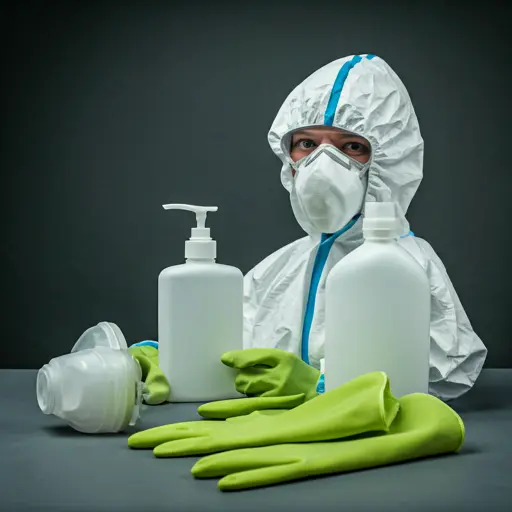
Handled carefully, from the first call
Professional crews manage containment, removal, and detailed cleaning so families and property owners do not have to face the affected area themselves.
Call (636) 219-9302The first hours: a calm order of steps
There is a workable order for the first hours, and following it protects both people and the property. First, make sure everyone is safe and that emergency services have been called if they are needed. Second, follow the instructions of responders and investigators without entering areas they have restricted, even briefly to retrieve belongings, until the property is formally released. Third, once release has happened, keep the affected area closed off from family members, visitors, and pets, and resist the urge to assess the damage closely yourself. Fourth, make the notification calls described below. Routine tasks such as ventilation, covering furnishings, or beginning any cleaning should wait for professional guidance, because early well-meant efforts can spread contamination to areas that were previously unaffected.
Who to call, and in what order
Emergency services come first whenever there is any question of safety or medical need. After that, the calls are practical. Notify your homeowner or property insurer and open a claim, and write down the claim number and the name of the person you spoke with. If the property is rented or managed, notify the landlord or property manager, who will have their own notification duties and records to keep. Family members who need to know should hear the news from you rather than arriving unprepared. Finally, contact a qualified cleanup provider to schedule an assessment once the property has been released. When you call Eversafe, the useful details are simple: the type of property, which rooms are affected, whether authorities have released the scene, and any access instructions. You will not be asked for graphic detail, and the assessment and written scope are arranged from that information.
What not to touch, and why
Until a professional assessment is complete, treat the affected area as closed. Do not handle items within it, do not run household cleaning products over surfaces there, and do not move furnishings between rooms, because each of those actions can carry contamination into clean areas and onto people. Avoid using the heating or cooling system to air out the space if the affected area is connected to it, until the provider advises otherwise, since moving air can distribute odors and particles beyond the original area. Personal belongings inside the affected area should be left exactly where they are. The cleanup team will document items in place, discuss with the responsible party which belongings can be cleaned and retained and which cannot, and handle that process as part of the written scope rather than leaving family members to sort through the area themselves.
How professional cleanup proceeds
A professional cleanup follows a deliberate sequence. The assessment confirms the extent of the affected area, the materials involved, and the controls the work requires. The crew then establishes containment around the work area and uses protective equipment matched to the conditions. Affected materials that cannot be cleaned are removed under controlled conditions and packaged for proper disposal, with the removals documented. What remains is cleaned in detail, surface by surface, and the area is dried where moisture is involved and ventilated as the scope requires. Odor-control steps may be included where the assessment supports them, and the responsible party is told plainly what result to expect.
At completion, the provider walks the responsible party through what was done, room by room, against the written scope. The project file, including photographs, the scope, and the invoice, is available for the insurer, the property manager, or the estate and family records. If the property will be occupied again right away, the provider can explain any final steps, such as when furnishings may be returned to the cleaned rooms. Families and owners across St. Louis, St. Louis County, and St. Charles County can begin with a single call and a released property. Get a Free Inspection – Call 636-219-9302.
Reviews from Restoration Customers
★★★★★ 5.0 on Google · ★★★★★ 4.8 on Angi
Read customer feedback about restoration services.
Selected customer reviews
Bob Gaines
3 months ago
"Chad fixed my mold. He explained to me exactly how the mold happened and why it would not happen again. He was very kind to me. I explained I was suffering from a medical level of anxiety and he was very understanding. Every day, Chad made sure to communicate clearly and keep me informed throughout the entire process."
Andrea Herron
6 months ago
"Eversafe Restoration was incredible to work with. We had unexpected water damage and Chad responded quickly and professionally. He explained everything clearly and made sure we understood the repair process. The crew was efficient and thorough. Highly recommend!"
Ryan McGovern
6 months ago
"They took care in giving me the best service. Very detailed oriented in repairing and finishing moisture damage in my home. They did such an excellent job, I won't think twice about calling Eversafe for anymore restoration needs I have in the future!"
Corey Holmes
3 months ago
"11/10 would recommend! Great job, great price, and it took them no time at all."
Matt Guthrie
6 months ago
"Did a great job."
Destiny Boschert
6 months ago
"Excellent service from start to finish. Professional and reliable."
Trauma Cleanup Questions
Clear answers about authority release, scope, documentation, and verification.
What should happen first?
Follow instructions from emergency responders and authorities. Do not enter or disturb a restricted scene. Once the property is released, keep people and pets away from affected areas and arrange qualified assessment.
What can cleanup include?
Depending on documented conditions, the written scope may include assessment, containment, appropriate PPE, controlled removal, physical cleaning, drying, odor-control options, and disposal.
Will insurance pay for cleanup?
Coverage and payment depend on the applicable policy and carrier determination. Eversafe can provide estimates, photographs, invoices, and supporting project documentation.
Is testing or clearance automatic?
No. Testing or post-remediation verification is not automatically included. When specifically requested or required, it may be separately coordinated with an authorized assessor.
Who do I call first after a trauma event at a property?
Call emergency services first if anyone needs help or the situation is not safe. After responders and authorities have finished and released the property, contact your insurer to open a claim and a qualified cleanup provider to assess the property. Property managers and landlords should also be notified promptly when a rental property is involved.
Can family members clean the property themselves?
Affected areas can involve materials that are unsafe to handle without training, protective equipment, and proper disposal. Beyond the health concern, cleaning a scene personally is an experience many families later wish they had been spared. A professional cleanup keeps family members away from the affected area and handles removal, cleaning, and disposal under a written scope.
What documentation will I need for the insurer or property manager?
Keep the incident or case reference information given by authorities, photographs taken only when safe and permitted, the written cleanup scope, and the final invoice. Eversafe provides estimates, photographs, invoices, and supporting project records that owners and property managers can pass to the carrier or keep with the property file.
Still have questions?
We're here to help you find the answers.
Discuss the Property Conditions
Call to discuss assessment and cleanup planning after release of the scene.