Smoke Odor Removal vs. Masking
Start with the residue, affected materials, and source before discussing odor-control options.
Masking is different from source work
Fresheners can change the smell without addressing residue or affected materials. A practical assessment identifies where smoke residue is present, what can be cleaned, what may require removal, and whether ventilation or contents handling belongs in the written scope.
What may be included
- Documenting the source and affected rooms or contents.
- Physical cleaning of surfaces and contents when appropriate.
- Removal or replacement of unsalvageable materials when included.
- Ventilation, drying, or separately scoped odor-control work where site conditions support it.
- Optional testing coordinated separately when a specific question warrants it.
This guide is about odor, and odor starts with residue
Smoke odor is not a scent floating free in a room. It is the smell of residue: fine particles and compounds deposited on walls, ceilings, fixtures, and contents, and absorbed into anything porous enough to hold them. Curtains, upholstery, carpet, insulation, unfinished wood, and even the paper face of drywall can store that residue and release it slowly for months. That storage is why a property can smell fine on a cool morning and unmistakably smoky by a warm afternoon, and why odor that seemed gone can return when the heating system starts moving air again in the fall.
Because the odor lives in materials, identifying the source means mapping where residue actually is, not just where the smell is strongest. Air currents carry odor away from its reservoir, so the room that smells worst is not always the room that needs the most work. An odor assessment documents which surfaces and contents carry residue, which are lightly affected, and which are clean, so the scope that follows spends effort where the residue is rather than treating every room the same.
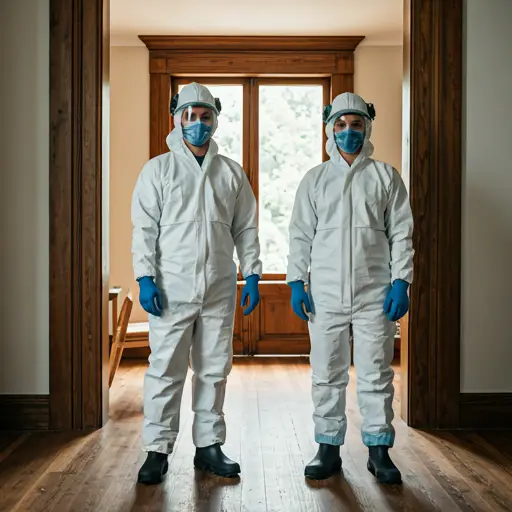
Odor lives in materials, not in the air
Residue stored in porous surfaces keeps releasing smoke odor long after the air clears, which is why Eversafe maps affected materials before any odor scope is proposed.
Call (636) 219-9302Why masking fails, every time the source remains
Masking products work by adding a stronger, pleasanter scent on top of the one you dislike. Nothing is removed, nothing is cleaned, and the residue underneath keeps doing exactly what it was doing. Within hours or days the added fragrance fades, the underlying odor reasserts itself, and the room often smells worse than before because two scents now compete. Scented candles, plug-in fresheners, odor-absorbing gels, and fragrance sprays all share this limit: they address perception for a short window and leave the cause untouched. Some heavily fragranced products add their own residue to fabrics and surfaces, creating a second layer a later cleaning has to deal with.
The subtler failure is false confidence. A masked room can pass a quick visit, so a landlord relets it, a seller lists it, or a family moves belongings back in, only for the odor to surface under the first warm, closed-up weekend. At that point the problem is no longer just odor; it is a dispute about what was disclosed and what was actually done. Work that removes residue, documented room by room, does not create that trap. Masking is not a cheaper version of removal. It is a deferral that usually returns with interest.
What real odor work involves, and when it earns its cost
Genuine smoke odor work is physical cleaning and, where cleaning is not enough, removal. Hard surfaces are cleaned to lift residue rather than spread it. Contents are evaluated piece by piece: some can be cleaned and aired, others have absorbed so much that keeping them keeps the odor. Porous building materials are the judgment call at the center of most scopes, because the difference between a surface that will clean and one that will keep releasing odor for a year is not always visible, and ventilation then does the finishing work, exchanging air in a controlled way so released odor leaves the property instead of relocating to a cleaner room.
Professional assessment earns its cost when the residue map is not obvious, when odor has reached wall cavities, ductwork, or insulation, when previous cleaning attempts have already failed, or when the property is changing hands or occupants and the work needs to be documented rather than asserted. It is harder to justify when a single item carries the odor and can simply be removed, or when residue is confined to washable hard surfaces you can clean thoroughly yourself. Either way, the honest first question is never which product to buy. It is where the residue is, what it sits in, and what removing it actually requires. To have that documented at your property, get a Free Inspection – Call 636-219-9302.
Health and occupancy questions
Odor work does not diagnose or treat medical conditions. Direct health concerns to a qualified medical professional. Occupancy instructions are project-specific and must come from the written scope and site directions.
Smoke Odor Questions
Why do smoke odors return after cleaning?
Residue may remain on porous surfaces or contents, or the source may not have been addressed. Assessment and physical cleaning are considered before any additional odor-control work.
Do you guarantee odor removal?
No. Results depend on the residue, materials, access, ventilation, and the work included in the written scope.
Is testing included?
Testing is not automatic. When a specific question warrants it, testing may be coordinated separately and remains separate from restoration work.
Can I stay in the property during odor work?
Occupancy instructions depend on the selected scope, products, access, and site conditions. Follow the written instructions for the project; no universal occupancy claim applies.
Why does smoke odor seem stronger on warm or humid days?
Residue absorbed into porous materials releases odor more readily as temperature and humidity rise, and heating or cooling systems can move that air through the whole property. A room that smelled acceptable in winter may smell strong again in summer, which usually means residue remains in the materials rather than a new source appearing.
Will painting over smoke odor solve it?
Paint alone covers a surface; it does not remove residue beneath it or in other materials, and odor can work through ordinary coatings. Any sealing step belongs after physical cleaning, as part of a documented scope, not as a substitute for it.
Still have questions?
We're here to help you find the answers.
Restoration Experiences
★★★★★ 5.0 on Google · ★★★★★ 4.8 on Angi
Selected customer reviews
Bob Gaines
3 months ago
"Chad fixed my mold. He explained to me exactly how the mold happened and why it would not happen again. He was very kind to me. I explained I was suffering from a medical level of anxiety and he was very understanding. Every day, Chad made sure to communicate clearly and keep me informed throughout the entire process."
Andrea Herron
6 months ago
"Eversafe Restoration was incredible to work with. We had unexpected water damage and Chad responded quickly and professionally. He explained everything clearly and made sure we understood the repair process. The crew was efficient and thorough. Highly recommend!"
Ryan McGovern
6 months ago
"They took care in giving me the best service. Very detailed oriented in repairing and finishing moisture damage in my home. They did such an excellent job, I won't think twice about calling Eversafe for anymore restoration needs I have in the future!"
Corey Holmes
3 months ago
"11/10 would recommend! Great job, great price, and it took them no time at all."
Matt Guthrie
6 months ago
"Did a great job."
Destiny Boschert
6 months ago
"Excellent service from start to finish. Professional and reliable."
Need help documenting smoke residue?
Request an assessment and written scope.