Restoration Insurance Documentation Guide
Restoration work and insurance claim decisions are separate responsibilities. Eversafe can document conditions and the work performed; the carrier determines coverage and payment under the applicable policy.
Understand the documentation role
Supporting records may include estimates, photographs, moisture documentation, invoices, and drying records. These describe assessment and restoration work. No particular payout, approval time, increase in settlement, or affiliation with an insurer is promised.
Clarify scope and authorization
Identify the assessed damage, proposed work, authorized decision-maker, and payment terms. Water extraction, cleaning, controlled material removal, drying, repairs, reconstruction, and requested testing should be distinguished. Additional work should be discussed before authorization rather than assumed to be covered.
Ask the appropriate policy questions
Ask your carrier or insurance professional about coverage, exclusions, limits, required documentation, claim procedures, and payment. Deductibles, depreciation, upgrades, non-covered work, and changes outside an approved scope can affect customer responsibility. Eversafe does not promise that you will only be responsible for a deductible.
Keep separate services clear
Post-remediation testing is not automatically included in standard mold remediation or its price. When requested or required, testing or verification may be separately coordinated, with independent findings separate from Eversafe's work. Repair and reconstruction are included only when specified.
For additional project-planning information, see water damage claim documentation. Contact Eversafe to discuss restoration conditions and the written scope for your property.
The claim file is built during the job, not after it
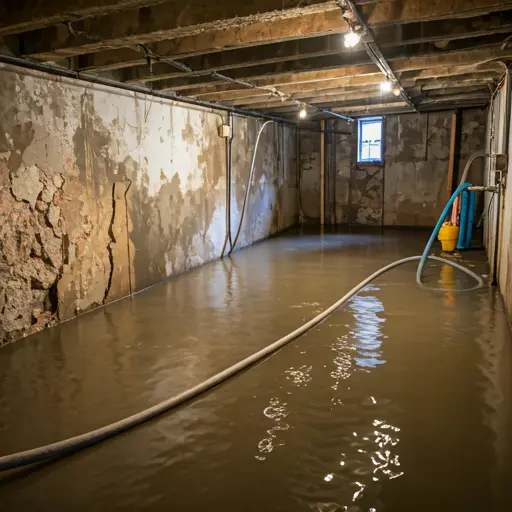
Moisture readings, dated photographs, and drying records are captured while the work happens, so the documentation reflects what was actually found and done.
Call (636) 219-9302How a claim and a restoration job move together, step by step
A claim and a restoration job run on parallel tracks, and understanding the order of events prevents most confusion. The first track is the loss itself: the property owner stops the source of damage where that can be done safely, protects people and belongings from further harm, and gives the carrier notice of the loss. Prompt notice matters because policies generally expect the owner to report damage and to take reasonable steps to limit further loss, and because early photographs show conditions before anything dries, is removed, or changes.
The second track is the project record. Eversafe assesses the property, documents affected materials and moisture conditions, and prepares a written scope for the work that is needed. That scope and the supporting photographs go to the owner and, when the owner directs it, to the adjuster. The adjuster reviews the loss under the policy, may visit the property or ask for additional records, and issues the coverage and payment decisions that only the carrier can make. Restoration then proceeds under the authorization the owner has signed, with drying monitored and recorded until documented goals are met. At closeout, the final invoice and the complete record describe what was found, what was done, and what the conditions were when the work finished. When each step happens in that order, the file tells one consistent story from first notice to final invoice.
What to photograph and record in the first hours
The most useful photographs are taken before mitigation changes the scene, and they cost nothing but a few minutes. Start wide: photograph each affected room from the doorway and from the corners so the extent of the damage is visible in a single frame. Then move closer and photograph the source of the loss if it can be seen, such as a failed supply line, an appliance, or a point where water entered. Photograph standing water against a fixed reference like a baseboard or a stair tread, because depth is hard to judge later from memory. Close views of affected flooring, wall bases, cabinetry, and contents show material damage that a wide shot misses.
Beyond photographs, write down the basic facts while they are fresh: when the damage was discovered, when it likely started, what was done to stop it, and who was contacted and when. Save receipts for emergency expenses and keep any failed part that caused the loss if it can be retained safely, since a carrier may want to inspect it. Keep original image files with their dates intact rather than screenshots or edited copies. Eversafe builds its own project photographs and measurements into the job file, but the owner record from the first hours often captures conditions that no longer exist by the time a crew arrives, and that early record strengthens the whole file.
What moisture logs and drying records actually show
Moisture documentation is the part of the file that answers the question every adjuster asks: why did the drying take as long as it took. A moisture map records readings at specific points in walls, floors, and framing, taken with meters that show how far water traveled beyond the visibly wet area. Readings are compared against a dry standard taken from unaffected material in the same building, so progress is measured against the property itself rather than a generic number. Daily logs then record the readings at those same points on each visit, the temperature and humidity conditions in the space, and the equipment placed to dry it.
Read together, those records show a trend: materials starting wet, responding to drying over a documented number of days, and reaching the dry standard before equipment is removed. That trend is what supports the equipment time on an invoice. Where readings stall, the log shows why, for example because water was trapped inside a wall assembly or because a material responds slowly. Eversafe documents water work consistent with applicable ANSI/IICRC S500 principles, and the drying record is part of the deliverable the owner receives, ready to hand to the carrier.
Documentation mistakes that slow a claim down
Most claim delays tied to documentation come from a short list of avoidable mistakes. The first is cleaning up or removing material before anything is photographed, which leaves the carrier reviewing a loss it can no longer see. The second is starting work without a written scope that separates the tasks involved, so emergency mitigation, material removal, drying, and cleaning blur into one undifferentiated charge. The third is gaps in the drying record: equipment running for days with no readings to show conditions changing. The fourth is discarding the failed component or damaged material before the carrier has had a chance to inspect it, when retaining it was practical.
A fifth mistake is assuming a verbal conversation settles anything. Approvals, scope changes, and payment questions should be confirmed in writing between the owner and the carrier, and any change to the restoration scope should be authorized in writing before the added work is performed. Finally, owners sometimes wait weeks to give notice of loss, which complicates every later step. None of these mistakes requires expertise to avoid. Photograph first, keep the written scope specific, record readings daily, retain key items when practical, and put decisions in writing.
What Eversafe provides, and what the carrier decides
The division of responsibility is simple. Eversafe provides the assessment, the written scope, the restoration work itself, and the supporting record: estimates, photographs, moisture documentation, drying logs, and invoices that describe the conditions found and the work performed. The owner authorizes the work, gives notice of loss, and carries the payment obligation under the restoration agreement. The carrier decides what the policy covers, what it pays, and when, based on the policy terms and its own review of the loss. Eversafe does not adjust claims, does not represent owners in disputes, and does not promise coverage or payment outcomes.
If you are at the start of that process and want the documentation handled properly from the first visit, the next step is an assessment of the property itself. Get a Free Inspection – Call 636-219-9302. Serving St. Louis, St. Louis County, and St. Charles County, Eversafe will document the conditions, explain the proposed scope in writing, and leave the coverage decisions where they belong, with you and your carrier.
Restoration Documentation Questions
Can Eversafe guarantee a claim payment?
No. Coverage and payment are determined by the policy and carrier. Eversafe can provide supporting project documentation, not a guaranteed payout or coverage decision.
What documents can Eversafe provide?
Estimates, photographs, moisture documentation, invoices, drying records, and other supporting records for insurance-related restoration claims, as applicable to the work.
Will all restoration services be covered?
That cannot be assumed. Ask your carrier or insurance professional about the particular loss and policy. Clarify authorized work and payment terms with the restoration provider.
Does Eversafe represent me in an insurance dispute?
This website describes restoration documentation assistance, not an offer of legal representation, public adjusting, or a guaranteed claim negotiation result.
What should I photograph before cleanup starts?
Photograph the source of the loss if it is visible, every affected room from several angles, close views of damaged materials, and any standing water before extraction. Add date and time notes and keep the original files. Wide room views plus close details give the carrier a clearer record than close views alone.
What do moisture readings and drying logs show?
Moisture readings show how wet specific materials were at specific points in the building on specific dates. Drying logs record equipment placement, daily readings, and progress toward a dry standard. Together they show why drying ran for the number of days it did and when materials reached a documented dry condition.
How long does a claim usually take?
Timelines vary by carrier, loss size, and how quickly information moves between the property owner, the restoration provider, and the adjuster. Prompt notice of loss, complete photographs, and a clear written scope reduce back and forth. No specific approval or payment date can be promised by a restoration provider.
Who pays Eversafe for the work?
The property owner who authorizes the work is responsible for payment under the restoration agreement, regardless of how a claim is decided. Insurance proceeds may reimburse some or all of that cost depending on the policy and carrier determination, so payment terms should be understood before work begins.
Still have questions?
We're here to help you find the answers.