Biohazard Cleanup Safety Protocols
Informational guidance for property owners planning assessment, cleanup, documentation, and safe material handling.
Plan around documented hazards
Keep people and pets away from affected areas and avoid contact with potentially hazardous material. A qualified provider can assess the source, affected materials, access, moisture, occupancy, and project requirements before work begins.
Depending on the written scope, work may include containment or engineering controls, PPE selected for the documented hazards, controlled removal of affected materials, detailed physical cleaning, drying, ventilation, and disposal. Products and equipment are selected for the conditions; no hospital-grade, chemical, or equipment claim should be assumed without a confirmed scope.
Documentation and verification
Photographs, estimates, invoices, moisture records, and other project records may support an insurance-related claim. Coverage and payment remain subject to the policy and carrier. Testing or post-remediation verification is not automatic and, when requested or required, is separately coordinated with an authorized assessor.
This guide does not diagnose medical conditions or provide medical treatment advice. For health concerns after exposure, contact a healthcare professional.
Training and protective equipment come in categories, not costumes
Professional cleanup starts with people who have been trained for this category of work: how to assess a scene without disturbing it unnecessarily, how to select protective equipment for the hazards actually present, how to set up and respect a work zone, and how to remove, clean, and package material in the right order. That training matters because the hazards on a given job are not always the visible ones, and the correct response to each is different. Protective equipment is likewise chosen by category rather than habit. Depending on the documented conditions, a scope may call for gloves rated for the task, eye and face protection, protective clothing that keeps contamination off skin and street clothes, and respiratory protection selected for the particles or vapors expected. Equipment that is wrong for the hazard, worn incorrectly, or removed in the wrong sequence offers far less protection than it appears to, which is one reason training and equipment are discussed together rather than as separate line items.
Containment protects the rest of the property
Before removal or detailed cleaning begins, the work area is separated from the rest of the property. Containment can involve sealing doorways and vents, establishing a defined entry and exit path, and controlling air movement so particles disturbed during work do not drift into clean rooms, furnishings, or ventilation systems. Contents outside the affected area are protected or moved clear, and anything that must cross the boundary is handled deliberately rather than carried through the house. The goal is simple to state and easy to get wrong without a plan: when the job ends, the affected area should be the only area that was ever affected. For occupants, containment also sets honest expectations, because it defines which rooms are off limits, for how long, and what must happen before those rooms return to normal use.
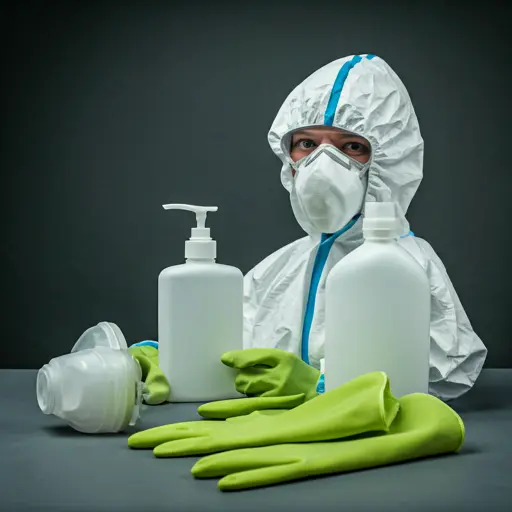
Careful work, handled with respect
Containment, protective equipment, and controlled removal protect occupants and the rest of the property while affected materials are dealt with under a documented scope.
Call (636) 219-9302Regulated waste is handled as its own chain of responsibility
Material removed from a biohazard cleanup is not ordinary trash, and treating it as such creates problems for everyone downstream. In general terms, affected material is packaged at the point of removal in appropriate containment, labeled as the applicable rules require, kept separate from household waste, and transported and disposed of through channels permitted for that category of waste. Each handoff is part of a chain: what was removed, how it was packaged, who took it, and where it went should be consistent from the work area to final disposition. A property owner does not need to manage that chain personally, but should expect the provider to describe it plainly before work begins and to reflect it in the project records afterward. If a proposal is vague about where removed material goes, that vagueness is worth resolving in writing before anyone starts.
Why untrained cleanup carries real risk
The instinct to handle a difficult cleanup personally is understandable, especially in a family home, but the risks are concrete. Contact with contaminated material can occur through skin, small cuts, splashes, and particles raised into the air by sweeping, scrubbing, or tearing out flooring and drywall. Household gloves and dust masks are not selected for these hazards, and consumer cleaning products are not a substitute for the physical removal and detailed cleaning a scope may require. There is also a spread problem: contamination travels on footwear, tools, vacuum exhaust, and waste bags carried through clean areas, quietly enlarging the affected footprint. Finally, there is the human side. These scenes are often tied to loss or trauma, and asking family members to perform the cleanup can compound an already hard experience. A professional crew brings distance as well as equipment, and that distance has genuine value.
What documentation a property owner receives
Good documentation closes the job properly. Expect a written scope agreed before work begins, dated photographs showing conditions before, during, and after, and an itemized invoice that matches the scope. Where materials were removed, the records should say what was removed and how the resulting waste was handled; where drying or moisture work applied, the readings belong in the file as well. This packet serves several audiences: an insurer reviewing a claim, a property manager closing a file, a landlord preparing a unit, or a future buyer asking what happened and what was done about it. Keep it with your other property records. If you are facing a situation like this anywhere in St. Louis, St. Louis County, St. Charles County, or the surrounding communities and want the conditions assessed and documented before deciding anything further, get a Free Inspection – Call 636-219-9302.
Reviews from Restoration Customers
★★★★★ 5.0 on Google · ★★★★★ 4.8 on Angi
Read customer feedback about restoration services.
Selected customer reviews
Bob Gaines
3 months ago
"Chad fixed my mold. He explained to me exactly how the mold happened and why it would not happen again. He was very kind to me. I explained I was suffering from a medical level of anxiety and he was very understanding. Every day, Chad made sure to communicate clearly and keep me informed throughout the entire process."
Andrea Herron
6 months ago
"Eversafe Restoration was incredible to work with. We had unexpected water damage and Chad responded quickly and professionally. He explained everything clearly and made sure we understood the repair process. The crew was efficient and thorough. Highly recommend!"
Ryan McGovern
6 months ago
"They took care in giving me the best service. Very detailed oriented in repairing and finishing moisture damage in my home. They did such an excellent job, I won't think twice about calling Eversafe for anymore restoration needs I have in the future!"
Corey Holmes
3 months ago
"11/10 would recommend! Great job, great price, and it took them no time at all."
Matt Guthrie
6 months ago
"Did a great job."
Destiny Boschert
6 months ago
"Excellent service from start to finish. Professional and reliable."
Biohazard Cleanup Questions
Clear answers about scope, safety, documentation, and verification.
What does a biohazard cleanup scope consider?
The source, affected materials, access, moisture, contamination, occupants, and project requirements. Work may include containment, appropriate PPE, controlled removal, physical cleaning, drying, and disposal.
Is testing included?
Testing or post-remediation verification is not automatic. When specifically requested or required, it may be separately coordinated with an authorized assessor.
Can Eversafe handle insurance?
Eversafe can provide estimates, photographs, invoices, and supporting project records. Coverage and payment remain subject to the applicable policy and carrier determination.
Are chemicals or special equipment always used?
No. Products, equipment, PPE, containment, and cleaning methods depend on documented hazards and the written scope. No universal procedure applies to every project.
Why should I not clean it up myself?
Untrained cleanup risks exposure through contact, splashes, and airborne particles, and household cleaning rarely reaches contamination absorbed into porous materials. It can also spread contamination to clean areas on shoes, tools, and waste carried through the property. Keeping people and pets out and leaving the area undisturbed until it is assessed is the safer course.
What paperwork does the property owner receive?
A written scope before work, and project records as the job proceeds: dated photographs, an itemized invoice, notes on materials removed and how waste was handled, and drying or moisture records where they apply. Keep these together; insurers, property managers, and future buyers may each ask for them.
Still have questions?
We're here to help you find the answers.
Discuss the Property Conditions
Call to discuss assessment and cleanup planning.