Restoration Guides
Straightforward guidance on water damage, mold, sewage, odor, and specialty cleanup — written for St. Louis area property owners.
How These Guides Are Organized — and How to Use Them
A water or mold problem usually starts with a question typed in a hurry: how long will drying take, is testing worth paying for, what should I photograph before I call anyone? This library exists to answer those questions in plain language, before you are asked to approve any work. The guides are grouped by the kind of problem you are facing rather than by a sales category, so you can read only the section that matches your situation and set the rest aside.
Five kinds of questions run through the collection. Water emergencies come first: the burst pipe, failed sump pump, and flooded basement guides written for the hour when the loss is still unfolding. Mold questions follow, covering what visible growth does and does not tell you, when sampling helps document conditions, and what remediation involves. Basement moisture guides sit inside the water section because that is where the problem usually announces itself — seepage, damp walls, and pressure-driven entry in below-grade rooms. Insurance documentation has its own titles explaining which records carriers ask for and who is responsible for producing them. Safety-led topics, sewage and biohazard cleanup, are kept in separate sections because the first decision there is not technique; it is who should stay out of the room.
Use a guide in three steps. Read the one that matches what you are actually seeing, then write down the dates, times, and observations it suggests recording while they are still fresh. Finally, decide on the next step with that record in hand — handle a small, understood problem yourself, or call for an assessment knowing which questions you want answered. A guide can explain how assessment, moisture documentation, and drying or remediation decisions work, but it cannot diagnose your property from a screen. Where a guide describes conditions more serious than a surface problem — standing water that keeps returning, sewage in living space, growth spreading across a large area — treat that as the signal to stop reading and start calling.
Where these articles describe professional work, they describe the same method Eversafe uses on the job: assess first, document moisture with readings and photographs, explain the options the conditions support, and put the scope in writing at a fixed price before work begins. Office hours are Monday through Friday, 9 to 5, and the phone at (636) 219-9302 is answered around the clock for emergencies. Get a Free Inspection – Call 636-219-9302.
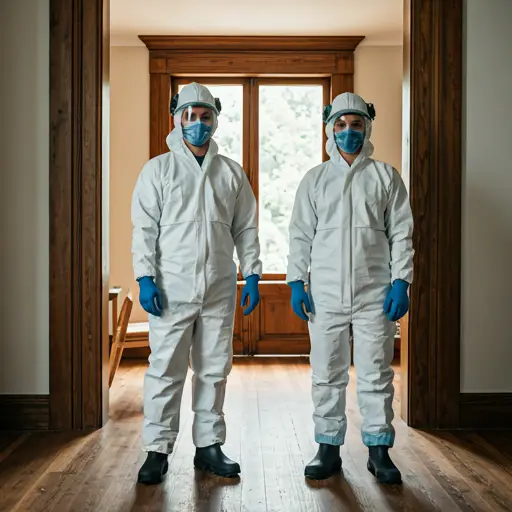
Read first. Decide with a record in hand.
Each guide tells you what to document before conditions change, so the conversation about scope and price starts from facts instead of recollection.
Call (636) 219-9302Water Damage
What to do when water intrudes — from the first hours through drying, documentation, and insurance.
Within this group, the emergency titles — house flood, burst pipe, sump pump failure — are written for the first hour, when shutting off the water and documenting conditions matters most. The process titles are slower reading for the days that follow: how restoration work is sequenced, why drying time is measured against readings rather than promised in advance, and how prevention steps lower the odds of a repeat loss. The basement titles take up the below-grade moisture questions St. Louis owners ask most often, and the insurance titles explain which records to keep while a claim is being decided.
What to Do After a House Flood
Practical first steps after household water damage, including safety, documentation, assessment, extraction, and drying.
Read guideUnderstanding the Water Damage Restoration Process
An overview of assessment, extraction, affected-material decisions, drying, documentation, and the written scope for a water restoration project.
Read guideHow Long Does Structural Drying Take?
Why materials, moisture conditions, access, and measured progress determine a structural drying schedule—not a fixed number of days.
Read guideHow Much Does Water Damage Restoration Cost?
What drives a water damage price in St. Louis — water category, affected materials, and drying days — and how a fixed price is set after assessment.
Read guideCan I Dry Water Damage Myself with Box Fans?
Box fans dry surfaces, not structures. When DIY drying is enough, when open windows hurt, and how drying is verified with moisture readings.
Read guideHow to Prevent Frozen Pipes in St. Louis Homes
Prevent frozen pipes in St. Louis: insulate exposed lines, seal drafts, protect outdoor faucets, and know what to do if a pipe bursts.
Read guideWhat to Do When a Pipe Bursts in St. Louis: The First Hour
A pipe burst is a gallons-per-minute problem. Shut off the water, protect against electrical hazards, document everything, and plan extraction and drying.
Read guideWhat to Do When Your Sump Pump Fails in St. Louis
Sump pump failed and the basement is wet? Cut power safely, document the water, and plan extraction and drying in St. Louis.
Read guideComparing Basement Waterproofing Estimates in St. Louis
Understand how conditions, access, source correction, drainage, drying, and repair scope affect a St. Louis basement project estimate.
Read guideBasement Seepage and Water Pressure: Planning an Assessment
Questions to ask about basement seepage, water-entry conditions, drainage proposals, and restoration scope before authorizing work.
Read guideBasement Moisture: What to Document Before an Assessment
Record basement moisture locations, timing, affected materials, and prior repairs before discussing a St. Louis-area restoration or waterproofing project.
Read guideFinding Flood Map Information for a St. Louis Property
Use official FEMA map information for a specific St. Louis-area address, and keep map questions separate from restoration assessment and insurance decisions.
Read guideWater Damage Documentation for a Missouri Insurance Claim
What to document after water damage in Missouri, and what insurers typically ask for when you file a claim.
Read guideRestoration Insurance Documentation: What to Expect
Understand Eversafe’s restoration-documentation role, clarify project responsibilities, and direct coverage and payment questions to your insurance carrier.
Read guideSewage Backups
Safety-first guidance for sewage events, which carry contamination risks beyond ordinary water damage.
These two guides deliberately lead with boundaries rather than technique. Sewage is contaminated water, and the decisions that protect people come first: keep occupants and pets out of the affected area, avoid skin contact, and do not move household items through it. Cleanup method, material removal, and cleaning verification are covered after those limits are set, because a sewage event handled casually can spread contamination into rooms that were never wet in the first place.
How to Deal with a Sewage Backup
A practical guide to sewage-backup safety, documentation, and restoration planning in the greater St. Louis region.
Read guideSewage Backup Cleaning Safety Guide
Practical sewage-backup safety and cleanup planning for St. Louis area property owners, based on documented conditions and project scope.
Read guideMold
How mold assessment, testing decisions, and source-removal remediation actually work.
The mold guides separate three questions that are often blurred into one: what am I looking at, do I need sampling to document it, and what does removal actually involve? Color is treated throughout as a poor identifier of species. Testing is presented as a documentation tool with real limits, not a verdict by itself. Remediation is described as source removal of affected material combined with fixing the moisture that fed the growth, consistent with ANSI/IICRC S520 — and the cost guide shows how to read an estimate line by line instead of accepting a total on faith.
Black Mold vs. Mildew: What Property Owners Can Document
Color and appearance do not establish mold species. Learn how to document visible conditions, moisture, affected materials, and appropriate next steps.
Read guideSigns of Mold in a Home: Conditions to Document
Learn how to document visible growth, musty odors, moisture, and concealed affected materials without relying on color or unsupported health claims.
Read guideIs Professional Mold Testing Worth It?
A practical guide to deciding when a mold inspection or separately coordinated testing may help document property conditions.
Read guideProfessional vs. DIY Mold Removal
Compare a limited surface-cleaning task with a documented mold-remediation scope based on moisture, affected materials, containment, and cross-contamination con
Read guideUnderstanding a Mold Remediation Estimate
How affected materials, access, moisture conditions, testing, and repairs shape a mold remediation estimate for a St. Louis-area property.
Read guideFound Mold in a House You're Buying? What to Do Before Closing
What a mold inspection and testing establish during the inspection period, what remediation involves, and how to weigh a repair credit against walking away.
Read guideWhy HEPA Vacuums Matter on a Mold Job
Eversafe picked up a batch of HEPA vacuums from ServiceMaster in St. Louis. Why a truly sealed HEPA unit matters during mold remediation, and how it fits source removal done right.
Read guideWhat a Small Crew Learns from the Big Operations
How a small local crew learns the restoration business: watching the operations that have done it the longest, and bringing the documentation habits home to a local job.
Read guideOdor
Source-focused odor assessment versus masking — what each approach can and cannot do.
The odor guides start from a skeptical premise: a smell that has been covered up for a showing or a weekend has not been solved. These articles explain how an odor source is located — in materials, in contents, or in the systems that move air through a building — and how cleaning or removing that source differs from masking it, so you can judge whether a proposed treatment addresses the cause or only the symptom you notice at the door.
Is Professional Odor Removal Worth It?
A practical guide to deciding when odor-source assessment, cleaning, material removal, or separately scoped testing may help.
Read guideSmoke Odor Removal: Source Cleaning vs. Masking
A practical guide to assessing smoke residue, cleaning affected materials, and defining an odor-removal scope without guaranteed treatment claims.
Read guideBiohazard & Specialty
Compassionate, safety-led guidance for difficult situations.
This section is written for people dealing with an already difficult event, and it keeps the property questions in a practical order: confirm the space is released and safe to enter, understand who is authorized to make decisions about the property and the belongings in it, then define a cleanup scope that respects both safety protocols and the people affected. The technical detail is limited to what a family member, executor, or property manager needs in order to make those decisions clearly.
Biohazard Cleanup Safety Protocols
Informational guidance on biohazard cleanup planning, property safety, documentation, and scope in the greater St. Louis region.
Read guideWhat to Do After a Trauma Event
Practical property-planning guidance after a trauma event, including safety, authorities, documentation, and cleanup scope.
Read guideEmpathy-Led Hoarding Cleanup Process
Informational guidance on authorization, belongings, property access, and scope for hoarding cleanup planning.
Read guideHow to Help a Loved One with Hoarding
A practical guide to respectful conversations, authorization, belongings, property access, and cleanup planning.
Read guide